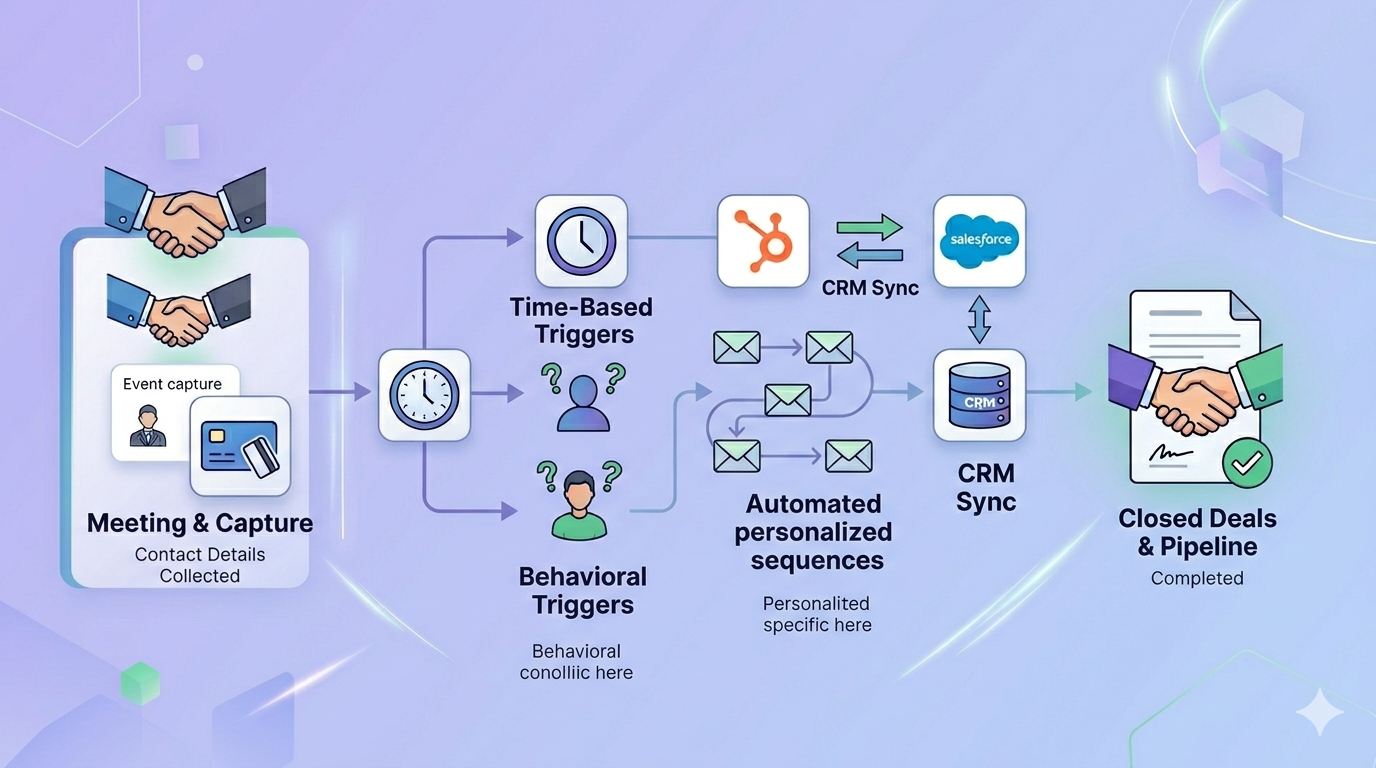
Most teams believe their revenue problems live inside their CRM. They point to poor reporting, messy pipelines, inadequate handoffs, and weak follow-up processes. But the uncomfortable truth is that most deals are already dead before they ever touch a CRM system. They die in the critical hours immediately following a real conversation—at events, after meetings, following introductions, right after those promising "great to meet you" moments.
That short window between conversation and system entry is where genuine opportunity either lives or completely disappears. And it's precisely where most businesses are still operating completely blind.
Where Deals Actually Fall Apart
Think about the last meaningful business conversation you had with a potential client or partner. You probably walked away thinking, "I'll write this down later," or "I'll follow up tonight," or "I'll add them to the system first thing tomorrow morning." And perhaps you actually did follow through on that intention.
But by the time you got around to it, the magic of that moment had already started to fade. The specific details had become fuzzy, the energy and enthusiasm from the conversation were gone, crucial context was missing from your memory, and any sense of urgency had naturally cooled. What felt genuinely promising and exciting in the moment had become just another contact in your database.
This isn't because there was no real opportunity in the original conversation. It's because nothing was designed to protect and preserve that opportunity during its most vulnerable stage. No system captured the conversation properly while context was fresh, no structure preserved the important details, and no immediate action was triggered when it would have mattered most.
So instead of moving forward with momentum, the conversation slowly disappeared into scattered note apps, buried WhatsApp message threads, growing stacks of business cards, and ever-expanding CRM backlogs. And eventually, it disappears into nothing at all.
The Myth of "We Need More Leads"
Most teams don't actually have a lead generation problem—they have a follow-through problem. They're constantly generating meaningful conversations through events, product demos, warm introductions, strategic partnerships, community engagement, and referral networks. The issue isn't access to potential opportunities.
The problem is that these conversational moments are incredibly fragile. Without immediate capture and systematic structure, they end up relying entirely on individual memory, personal discipline, and the dangerous assumption of "I'll handle it later." And humans, despite their best intentions, make terrible systems for preserving business opportunities.
Memory naturally decays over time, motivation drops as other priorities compete for attention, and administrative tasks pile up until they feel overwhelming. By the time someone finally gets around to logging important information, the potential deal is already significantly colder than it should be, and the window for optimal follow-up has largely closed.
So teams naturally assume the problem must be volume-related and invest in more advertising, more events, and more outbound outreach. But they're trying to fix the wrong problem entirely. The real leak in their system happens immediately after conversations occur, not before they happen.
CRMs Don't Solve This Critical Stage
Customer relationship management systems are fundamentally built for managing known, established opportunities that have already been identified and qualified. They're not designed for protecting fresh, fragile opportunities that exist in the immediate aftermath of initial conversations.
Traditional CRMs begin their value after someone has already made the conscious decision to log a lead, clean and organize the data, and create a formal record in the system. But modern business development doesn't actually start at that point. Real business starts in conference rooms, on phone calls, in hallway conversations, at dinner meetings, and through personal introductions.
The gap between that initial moment of connection and formal CRM entry is exactly where most potential value quietly dies. This isn't happening because sales teams don't care about opportunities or because they're not motivated to succeed. It happens because they don't have access to systems specifically designed for that crucial moment when relationships first begin to form.
The Real Competitive Advantage Is Systematic Speed
The companies that consistently win new business aren't necessarily the ones with the most sophisticated dashboards or the most feature-rich CRM platforms. They're the organizations that have mastered the ability to capture context immediately while it's still accurate, respond to interest while it's still alive and active, follow up while they're still clearly remembered by the prospect, and move conversations forward systematically before natural enthusiasm begins to cool.
This kind of speed protects opportunity in ways that individual hustle or high-pressure tactics simply cannot. It's not about rushing prospects or applying artificial urgency. It's about having systems in place that work automatically at the moment when business relationships are most vulnerable and most promising.
Why Conexa Exists
Conexa was specifically built to address the part of business development that most tools completely ignore—the critical moment that occurs immediately after a meaningful conversation takes place. Our platform captures contacts and conversation context in seconds rather than hours or days, structures what matters most using AI so important details don't get lost, activates appropriate follow-ups and next steps immediately while interest is at its peak, and syncs only clean, qualified opportunities into your existing CRM so your pipeline reflects genuine potential.
The goal is straightforward: ensure that valuable conversations don't simply disappear, momentum doesn't die during administrative delays, and real opportunities actually get the future they deserve. Conexa isn't designed to be another CRM competing in an already crowded market. It's the protective layer that sits before your CRM, specifically designed for the stage where deals are usually lost before they're ever formally tracked.
If Your Business Runs on Conversations
If your business model depends on building relationships and having meaningful conversations with potential clients or partners, then your ultimate success isn't determined by how many people you meet or how many events you attend. Success is determined by what happens in the hours and days immediately following those conversations.
If you don't have systems in place to protect the moment when opportunity is born, you can't effectively protect the deal that might grow from it. And solving that specific, critical problem is exactly what Conexa was built to address.