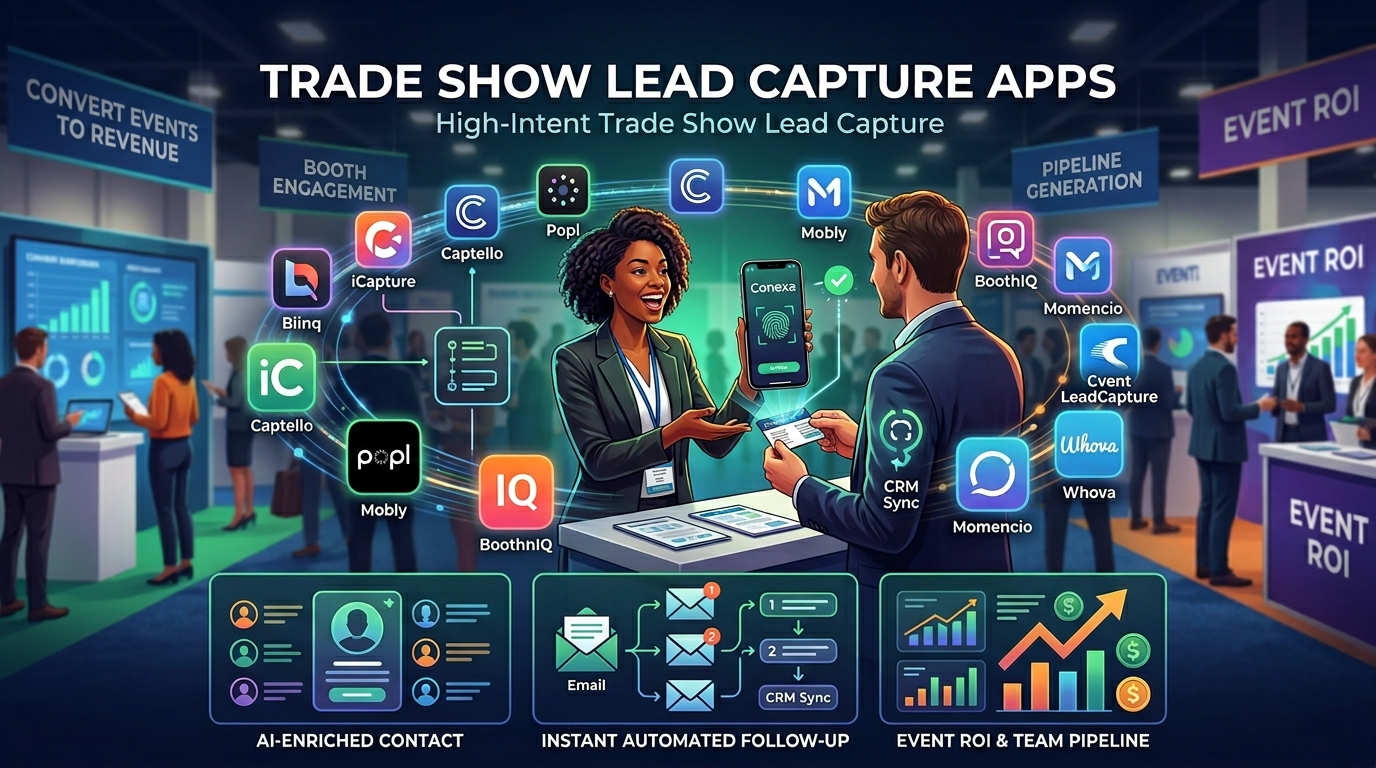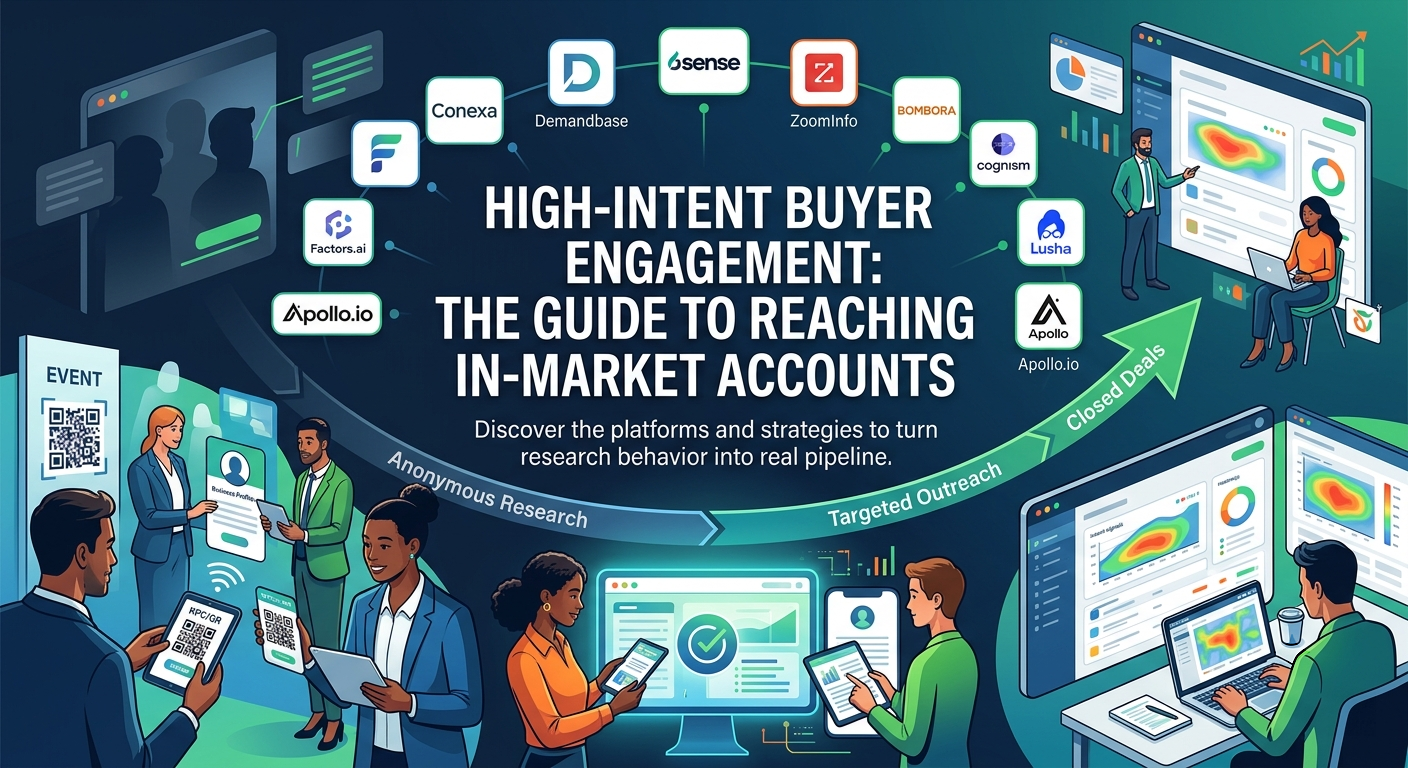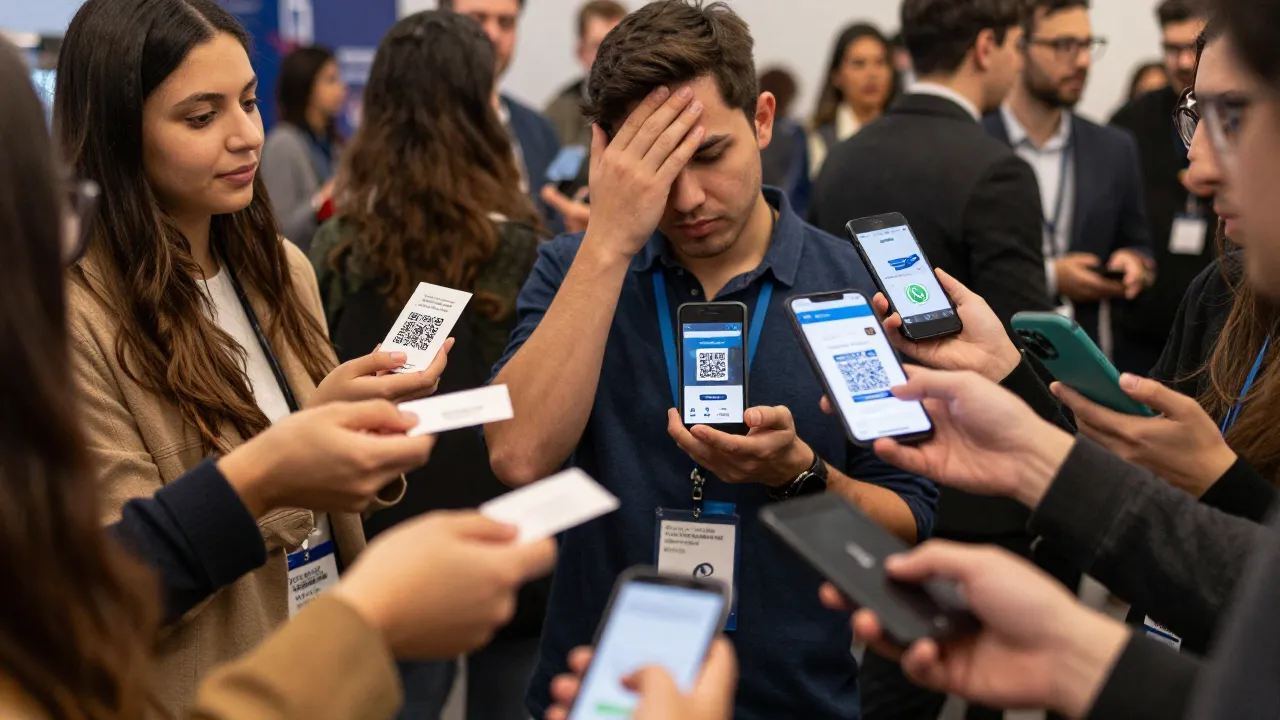
Every year, companies spend millions on events, conferences, meetups, and networking. Teams travel across the country, booths are built with precision, badges are printed in bulk, hands are shaken with enthusiasm, and business cards are exchanged with promise. And after all of that investment and effort, very little turns into actual revenue.
This isn't because people didn't show up or because meaningful conversations didn't happen. It's because most networking efforts are fundamentally designed to collect, not convert. And collection is not conversion.
The Illusion of Progress
Events feel incredibly productive in the moment. You meet interesting people, discuss exciting ideas, exchange contact information, and come home with a stack of cards and a phone full of new names. It feels like momentum, like real progress toward your business goals.
But momentum without structure disappears quickly. Most teams make the critical error of confusing activity with progress, contacts with opportunities, and attendance with pipeline development.
So the event ends, the team flies home, and reality hits hard. Who was actually serious about doing business? Who needed immediate follow-up? What did they specifically care about? What was discussed in detail? What commitments were made? And suddenly, nobody is quite sure anymore.
Where Networking Really Breaks
Here's the truth: networking doesn't fail at the event itself. It fails afterward. It breaks down when notes are written days later from fading memory, when context becomes incomplete or entirely lost, when leads are simply dumped into a CRM without proper qualification, when follow-ups are delayed beyond the window of relevance, and when messages become painfully generic.
We've all seen these follow-ups: "Great to meet you." "Just following up." "Hope you're well." These messages carry no memory of the actual conversation, no relevance to what was discussed, and no sense of urgency about next steps. When relevance disappears, interest fades rapidly. By the time most teams finally act, the emotional connection from the event is already cold.
Contacts Are Not Opportunities
Most event tools optimize for volume—scans, lists, exports, and data dumps. But sustainable sales isn't built on lists. It's built on timing, context, intent, and trust. Without capturing what was specifically said, why it mattered to that person, and what should logically happen next, contacts remain completely passive. They don't move forward, they don't mature into opportunities, and they don't convert into revenue. They simply exist in your database.
Why Follow-Up Fails
Follow-up is where events are either won or completely wasted. But most teams follow up too late, too broadly, and too generically because their manual systems don't protect the crucial moment of connection.
After an event, teams typically face hundreds of names, scattered notes taken on phones or napkins, inconsistent data quality, and completely unclear priorities. So follow-up inevitably becomes bulk emails, mass LinkedIn messages, and vague check-ins that add no value. And bulk communication rarely builds business—relevant, personalized follow-up does.
The Teams That Actually Convert Events
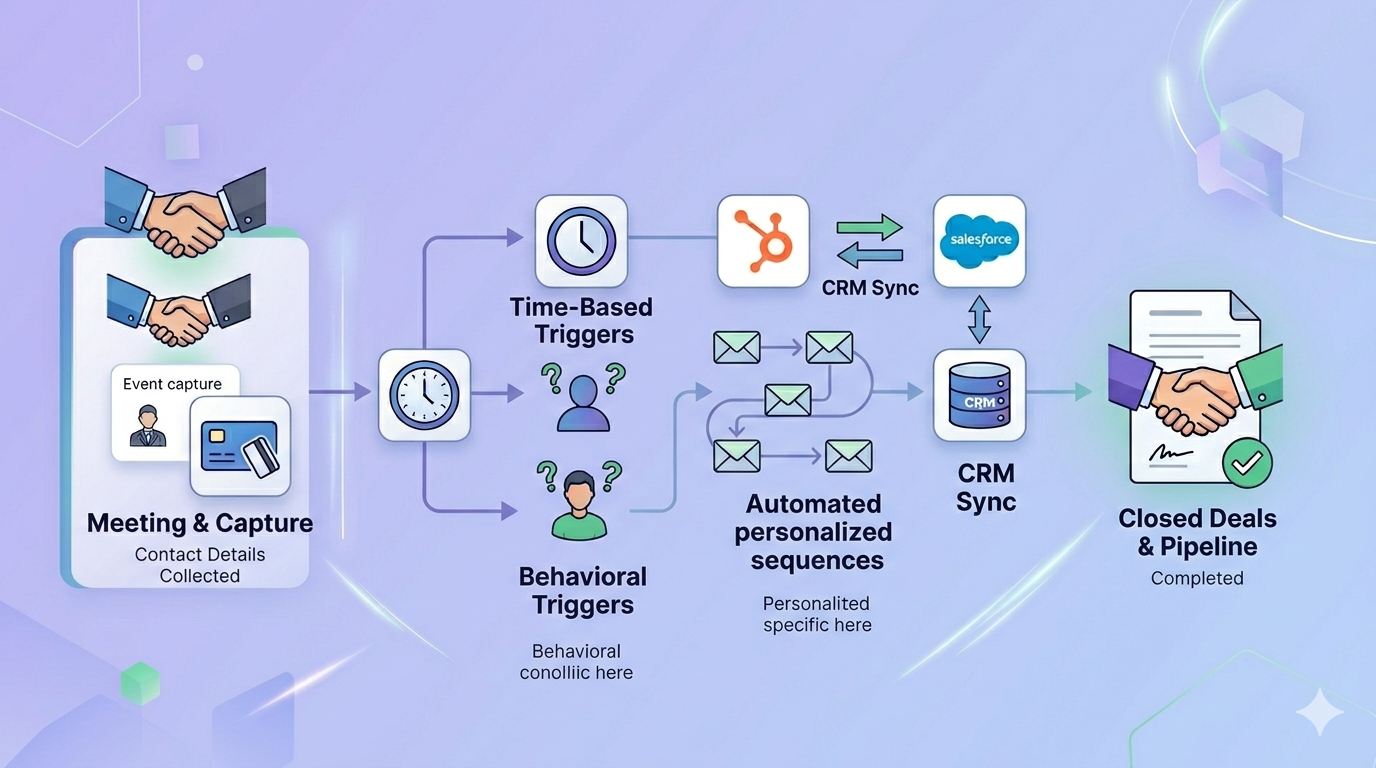
High-performing teams approach events differently. They don't treat events as simple lead sources; they treat them as relationship starting points. They focus on capturing conversations in real time while context is fresh, structuring that context immediately so nothing is lost, qualifying intent early while interest is high, and activating next steps while the energy from the conversation is still alive.
These teams don't wait to "process" the event later when they're back in the office. They work it actively throughout the event itself. And because of this systematic approach, their events don't end when the venue doors close—they seamlessly turn into consistent deal flow.
Why Conexa Exists
Conexa was built because networking and events shouldn't end in spreadsheets or forgotten contacts. We created Conexa to sit directly at the moment of connection, capturing people and context in seconds rather than hours or days. The platform structures conversations automatically, highlights genuine opportunities based on real intent, activates follow-ups immediately while interest is fresh, and syncs only clean, qualified relationships into your CRM.
The goal is simple: help events stop producing meaningless lists and start producing measurable revenue. Conexa doesn't help you attend more events—it helps you systematically convert the ones you already invest in attending.
If Your Calendar Is Full But Your Pipeline Isn't
Your problem isn't exposure or access to people. It's execution. Conversations are happening at every event you attend, but without systems specifically built for what comes after those conversations, opportunity quietly expires while you're focused on the next event.
Most networking doesn't fail because people don't try hard enough or because they're not good at connecting with others. It fails because nothing protects and nurtures the moment when business relationships actually begin to form. That's the critical gap Conexa was built to fill.