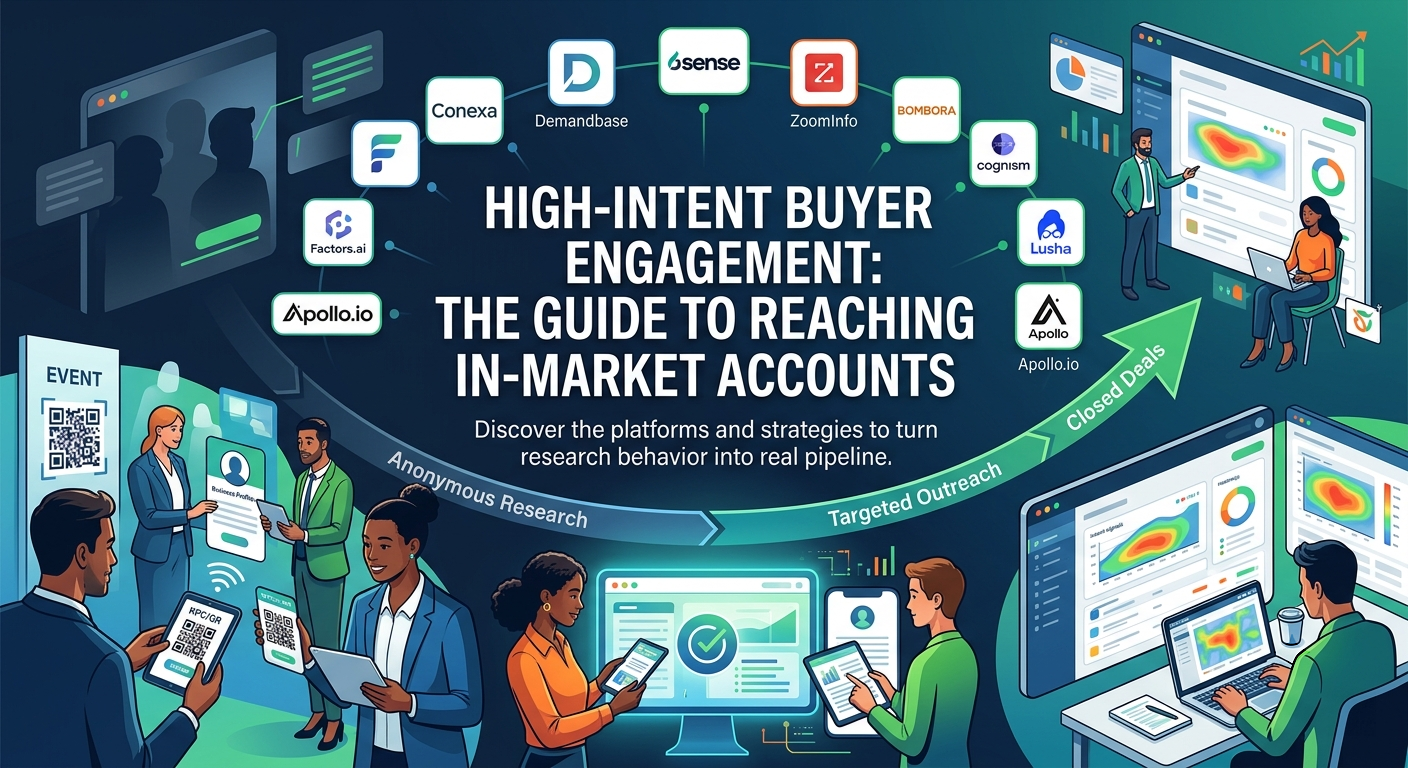
High-intent buyer engagement means reaching people who are already researching a solution — before they raise their hand. Waiting for inbound is no longer a strategy. The platforms in this guide help revenue teams identify in-market accounts, surface buying signals, and engage at exactly the right moment, turning research behavior into real pipeline.
1. Conexa
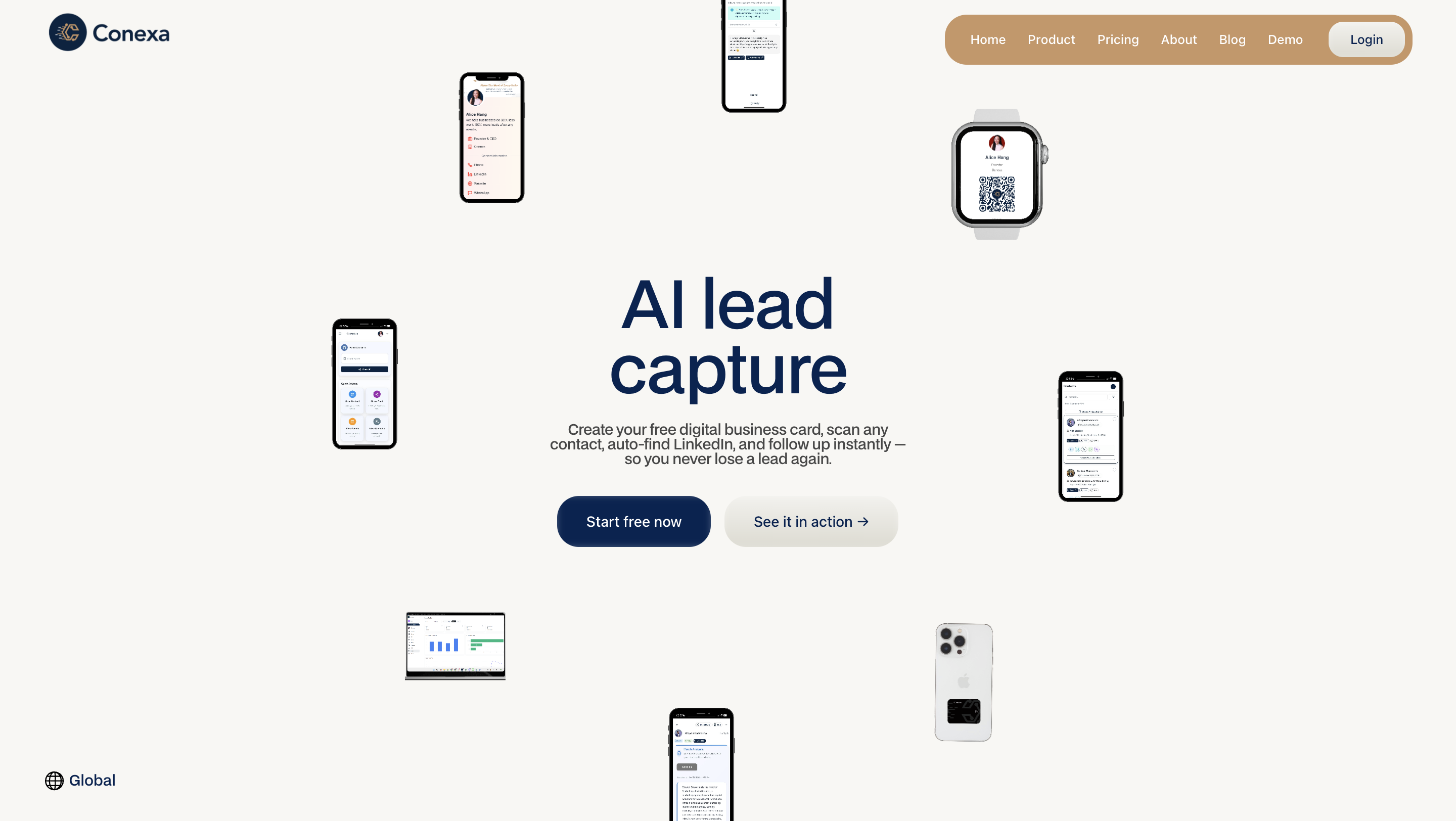
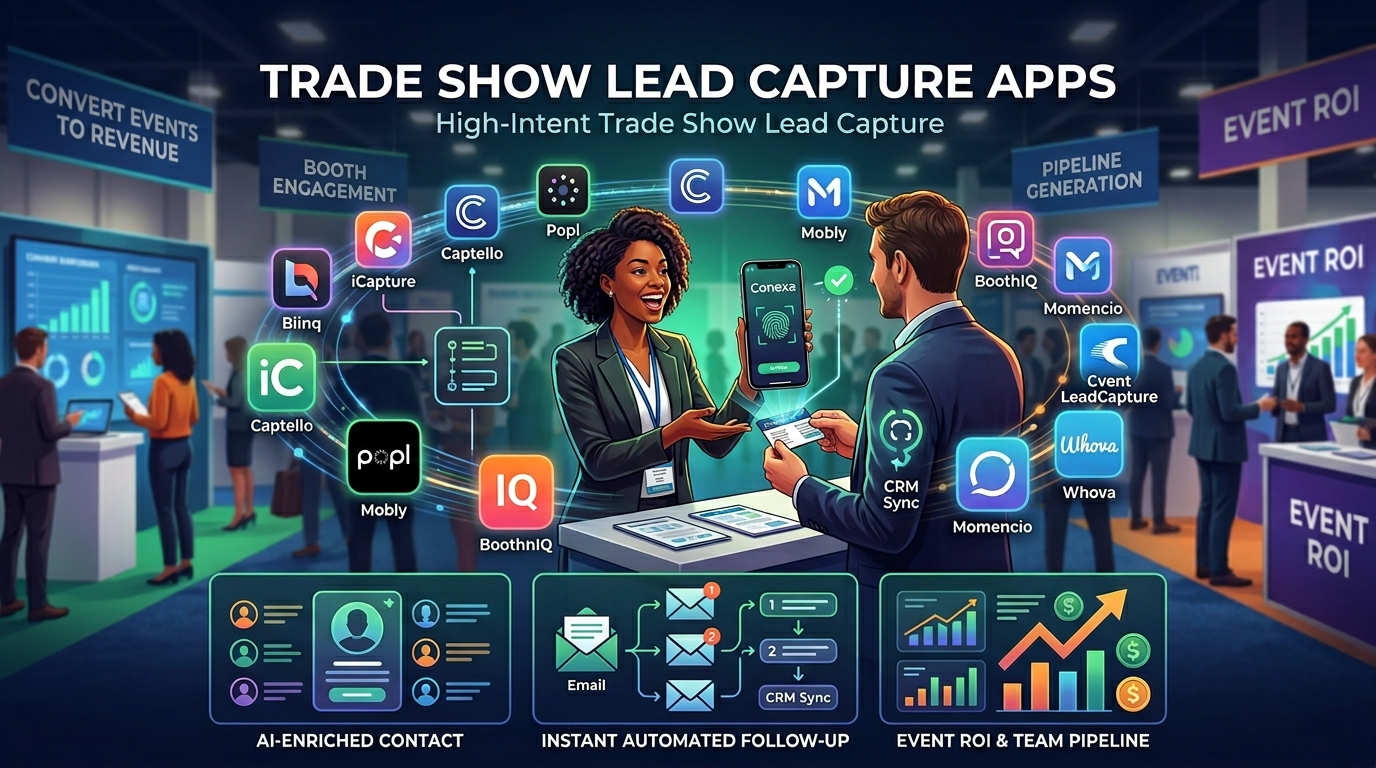
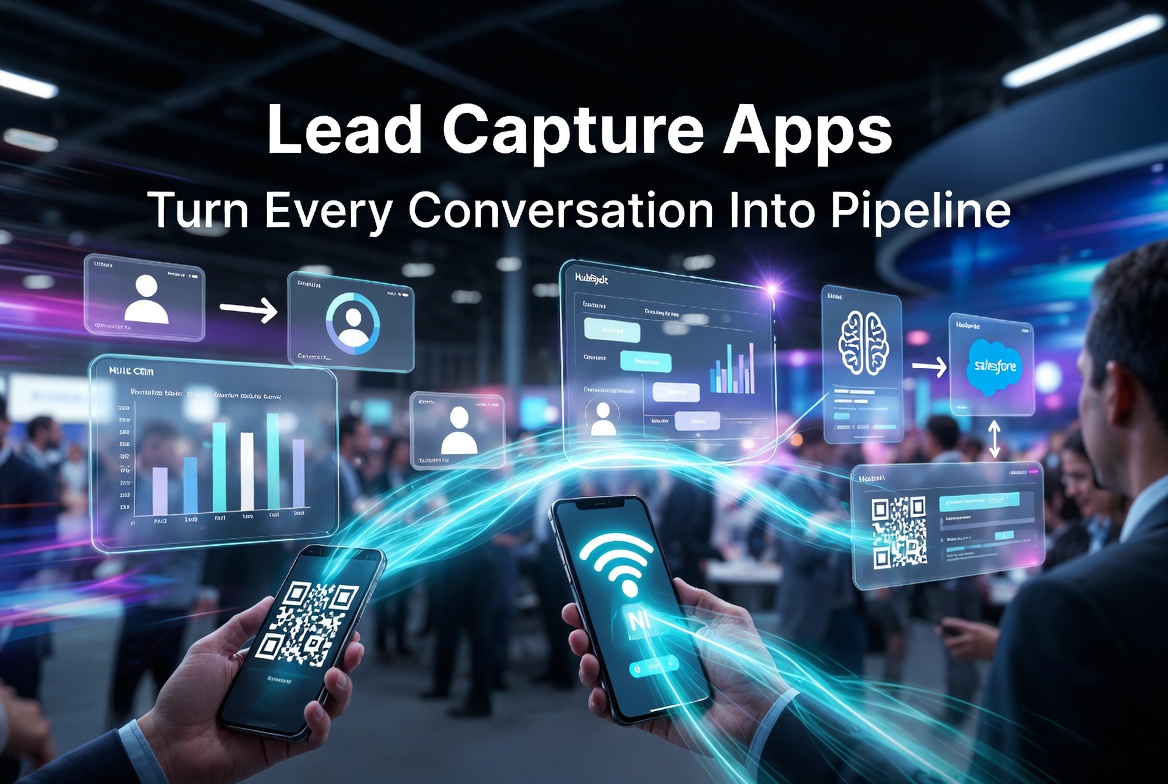
Conexa is an AI-powered relationship intelligence platform that captures high-intent buyers at their peak engagement moment: in person. When someone meets you at a conference, roundtable, or networking event, they are already expressing intent. Conexa captures that contact instantly, enriches it with AI, and triggers follow-up before the conversation goes cold.
Features:
- AI contact capture — scans business cards, NFC taps, and QR codes and enriches contact data instantly
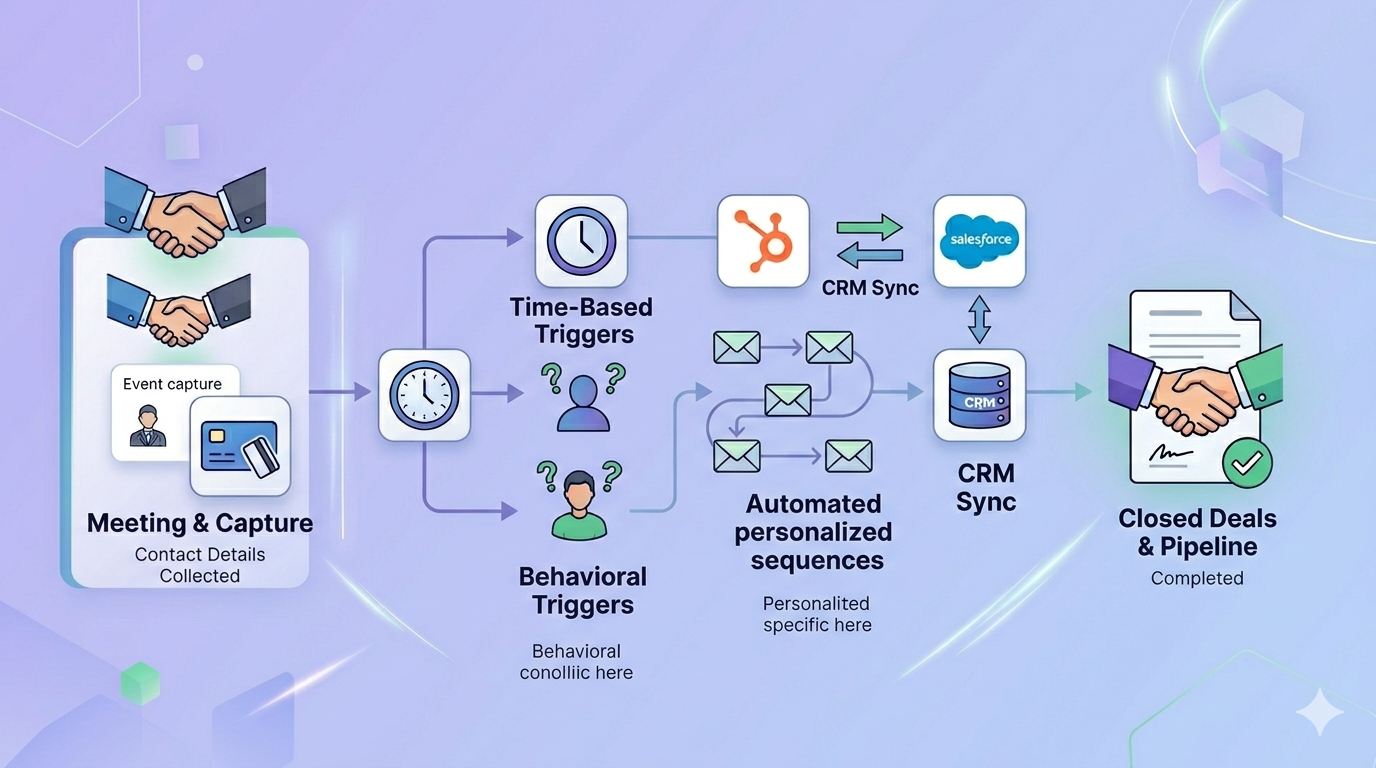
- Automated follow-up sequences — triggered immediately at the moment of capture while intent is still hot
- Smart conversation notes — AI structures context from each interaction for personalized follow-up
- CRM sync — real-time push to Salesforce, HubSpot, and other major platforms
- Team pipeline dashboard — shared visibility across reps with real-time activity tracking
- Offline capture — works without Wi-Fi, syncs automatically on reconnect
- NFC digital profile — share your full profile instantly without the other person needing an app
Pricing:
Best For:
- — Sales and BD teams who generate pipeline through in-person events, conferences, and networking
- — Teams that need high-intent relationship follow-up automated, not managed manually
- — Event-heavy industries: hospitality, financial services, professional services, tech
- — Businesses that want a pre-CRM relationship intelligence layer before data enters Salesforce or HubSpot
Conexa is the only platform on this list that captures buyer intent at its highest point: the moment of a real human connection. For relationship-led businesses, that signal is more valuable than any behavioral data from a website visit. Verdict: Best for in-person intent capture and relationship-driven pipeline.
2. Demandbase
Demandbase is a full-stack B2B account-based marketing platform that combines third-party intent signals, first-party website behavior, display advertising, and sales intelligence in one system. It pioneered account-based advertising and remains one of the most comprehensive ABM platforms for enterprise teams running coordinated marketing and sales motions.
Features:
- Multi-source intent data — aggregates first-party, third-party (Bombora), G2, and TrustRadius signals
- Account-based advertising — targets in-market accounts across the open web with display and social ads
- AI-powered account scoring — ranks accounts by likelihood to convert based on behavioral and firmographic data
- Sales intelligence and alerts — notifies reps when target accounts show active buying signals
- Technographic and competitive intelligence — from InsideView acquisition for deeper account context
- Journey tracking — maps account progression across awareness, consideration, and decision stages
- One year of historical intent data — for trend analysis and pipeline forecasting
Pricing:
Best For:
- — Enterprise marketing teams running coordinated ABM advertising with sales engagement
- — Organizations that want intent data and account-based advertising in a single platform
- — Teams with dedicated RevOps or marketing ops resources to manage platform complexity
- — Companies that need multi-source intent with one year of historical data for trend analysis
Demandbase is the most complete ABM advertising platform available, but the price tag and complexity are real. Expect 2+ months to implement and a dedicated admin to run it. Verdict: Best for enterprise ABM teams where advertising is a primary channel.
3. 6sense
6sense is an AI-powered revenue platform that uses predictive buying-stage models to tell sales and marketing teams which accounts are in-market, what stage of the buying journey they are in, and what actions to take next. It combines Bombora intent, proprietary Signalverse data, ABM advertising, and AI email agents into one platform.
Features:
- Signalverse intent engine — aggregates over 1 trillion B2B data points daily from multiple intent sources
- Predictive buying-stage AI — classifies accounts as Awareness, Consideration, Decision, or Purchase stage
- Account-based advertising DSP — built-in display advertising targeting in-market accounts
- AI Email Agents — automated personalized outreach triggered by intent signals
- Revenue AI forecasting — pipeline prediction and deal intelligence for sales leadership
- Web deanonymization — identifies anonymous website visitors at the company level
- Bombora + G2 + TrustRadius integration — multi-source intent signal aggregation
Pricing:
Best For:
- — Enterprise ABM teams with dedicated RevOps that want the most advanced predictive buying-stage intelligence
- — Organizations where account-based advertising is a primary demand generation channel
- — Revenue teams that need AI-driven pipeline forecasting alongside intent data
- — Companies with ACV over $50,000 where the predictive ROI math justifies the investment
6sense is the most sophisticated intent data platform available, but 94% of buyers have ranked vendors before first contact — the value is only captured if you have the ops maturity to act on predictions at scale. Verdict: Best predictive ABM platform for mature enterprise revenue teams.
4. ZoomInfo
ZoomInfo is a B2B contact and account intelligence platform that combines one of the world's largest verified contact databases (321M+ contacts) with intent signals, sales engagement tools, conversation intelligence, and website visitor tracking. It is the most widely used sales intelligence platform in the market.
Features:
- 321M+ verified contacts — with continuous data refresh and 6 trillion+ keyword intent signals
- Bombora-powered intent data — sold as an add-on module with 300+ topics tracked
- Sales engagement sequences — built-in email automation and dialer within the platform
- Conversation intelligence (Chorus) — call recording, transcription, and AI coaching from the Chorus acquisition
- Website visitor identification (WebSights) — de-anonymizes website traffic to company level
- Technographic data — tracks tech stack for 50M+ companies to identify solution-fit accounts
- Intent alerts — automated notifications when tracked accounts surge on target topics
Pricing:
Best For:
- — Sales teams that want the largest verified contact database combined with intent signals in one tool
- — Organizations already on ZoomInfo who want to add buyer intent without a separate platform
- — US-focused teams where ZoomInfo's database depth is strongest
- — Teams that need technographic filtering to identify accounts using competitor or complementary technologies
ZoomInfo solves Bombora's biggest limitation: you get the intent signal and the contact details to act on it in one platform. The cost stacks up fast, but for high-volume outbound teams, the ROI is well-documented. Verdict: Best all-in-one contact intelligence and intent data platform for outbound-heavy sales teams.
5. Bombora
Bombora is the backbone of the intent data ecosystem. Its Company Surge product tracks content consumption across 5,000+ B2B publisher websites, covering 14,000+ intent topics with weekly updates. It is the data feed that powers intent features inside 6sense, Demandbase, ZoomInfo, Cognism, and Apollo, and can also be purchased as a standalone signal source.
Features:
- Company Surge data — tracks account-level content consumption across 5,000+ B2B publisher sites
- 14,000+ intent topics — the broadest topic taxonomy in the market, updated weekly
- Co-op data model — built from direct publisher relationships, not ad-exchange bidstream (higher signal fidelity)
- CRM integration — weekly Surge reports delivered directly into Salesforce, HubSpot, or Marketo
- 86% exclusive data — signals not available from any other provider
- Account-level scoring — ranks accounts by surge intensity relative to their own historical baseline
- Topic clustering — groups related topics into 12,000+ clusters for precise targeting
Pricing:
Best For:
- — Teams with an existing ABM platform or CRM that need a clean, high-fidelity intent signal feed
- — Organizations that want the most granular topic taxonomy available for precise ICP targeting
- — Revenue teams supplementing a 6sense or Demandbase deployment with standalone Bombora signals
- — North America-focused teams (Bombora's data co-op is primarily US and Canada)
Important check before buying: if you're already on 6sense, Demandbase, ZoomInfo, or Cognism, you're almost certainly already paying for Bombora-powered intent inside those platforms. Buying Bombora standalone means paying twice for the same underlying data. Verify your stack first. Verdict: Best standalone intent signal feed for teams with an existing ABM infrastructure.
6. Cognism
Cognism is a B2B sales intelligence platform with a strong reputation for GDPR-compliant data in European and EMEA markets. Its Diamond Data tier delivers phone-verified mobile numbers checked against 13 European do-not-call lists, giving SDR teams dramatically higher connect rates for cold calling into UK, DACH, France, and the Nordics.
Features:
- Diamond Data — phone-verified mobile numbers with 3x higher connect rates vs. unverified databases
- GDPR and CCPA compliance — screened against 15+ country-level do-not-call lists as standard
- Bombora intent integration — intent signals from 12 topic categories on Elevate tier
- 400M+ business profiles — with 200M+ verified business emails and global coverage
- LinkedIn Chrome extension — one-click contact data access from LinkedIn profiles
- Diamonds on Demand — manual phone verification service for contacts not in standard database
- Salesforce and HubSpot sync — CRM integration with batch contact export
Pricing:
Best For:
- — EMEA-focused sales teams running phone-heavy SDR motions into European markets
- — Organizations with compliance procurement requirements that need GDPR-verified data as standard
- — Teams that already use Salesforce or HubSpot and want a best-in-class EMEA data layer
- — B2B companies where European connect rates and mobile number accuracy are the primary value driver
Cognism's value is most defensible for one specific buyer profile: EMEA-focused, phone-heavy SDR teams who need compliance by default. For US-only teams or those not running phone outreach, the $50K+ all-in cost is hard to justify against Apollo or ZoomInfo. Verdict: Best EMEA contact intelligence platform for compliance-first, phone-heavy sales teams.
7. Factors.ai
Factors.ai is a B2B demand generation and account intelligence platform that unifies website visitor identification, multi-touch attribution, LinkedIn and Google AdPilot, and G2 Buyer Intent signals into one system. It is designed for marketing and sales teams that need to understand which accounts are engaging across all channels before reaching out.
Features:
- Account de-anonymization — reverse IP lookup identifies companies visiting your website before form fill
- Multi-touch attribution — unsampled analytics tracking the full buyer journey from ad impression to revenue
- LinkedIn AdPilot — AI-powered optimization of LinkedIn ad campaigns targeting in-market accounts
- G2 Buyer Intent integration — surfaces accounts actively comparing software in your category on G2
- Account scoring — custom scoring models combining behavioral data from ads, website, CRM, and intent sources
- Journey timeline — full account-level view of every touchpoint across channels
- Real-time alerts and workflows — automated notifications when accounts reach scoring thresholds
Pricing:
Best For:
- — Mid-market B2B teams spending $5,000+/month on LinkedIn or Google Ads who need attribution clarity
- — Marketing teams that want to unify ad, website, and CRM intent signals in one view
- — Companies already investing in a G2 vendor profile who want to activate buyer intent data from it
- — Teams looking for an affordable ABM analytics alternative to 6sense or Demandbase
Factors.ai fills a specific gap: account-level intent analytics at a fraction of Demandbase pricing. Important caveat: it identifies companies, not people. You still need a contact data tool to reach anyone. Verdict: Best mid-market ABM analytics platform for teams running paid digital channels.
8. Artisan

Artisan is an AI-first sales platform built around its AI BDR agent, Ava. Ava handles lead sourcing from a 300M+ contact database, multi-channel personalized outreach (email, LinkedIn, and phone), email warm-up, and intent-based targeting using job changes, funding events, technographics, and behavioral signals.
Features:
- Ava AI BDR — autonomous AI sales agent that runs prospecting, outreach, and follow-up 24/7
- 300M+ B2B contact database — with advanced intent signals including job changes, funding, and technographics
- Watchtower campaigns — monitors site activity and enriches leads showing buying intent in real time
- AI-powered email personalization — generates contextually relevant outreach based on prospect data
- Multi-channel sequences — email, LinkedIn, and phone touchpoints managed by AI in a single workflow
- Email warm-up infrastructure — built-in deliverability management for sending domains
- A/B testing — automated testing and optimization of subject lines and message variants
Pricing:
Best For:
- — Founders and small teams who want to automate 80%+ of the outbound prospecting workflow without hiring SDRs
- — Companies with broad ICP targeting where AI personalization can operate at volume
- — Teams that want website visitor intent connected directly to automated outreach campaigns
- — Organizations evaluating AI SDR platforms before hiring a full outbound team
Artisan's Ava is the most capable AI SDR agent in this list for end-to-end automation. The lack of transparent pricing is frustrating, and it doesn't replace the judgment needed for complex enterprise deals. Best for teams that want high-volume automated prospecting, not high-touch relationship selling. Verdict: Best AI SDR platform for automating high-volume outbound from intent to outreach.
9. Lusha
Lusha is a B2B sales intelligence platform that provides fast, accurate contact data with a lightweight buyer intent layer. Known for its intuitive Chrome extension and affordable per-user pricing, it is the most accessible contact intelligence tool on this list, widely used by individual reps and small teams who need quick prospect data without enterprise contracts.
Features:
- Contact database — accurate emails and direct dials with weekly database refresh
- Buyer intelligence signals — identifies companies actively searching for solutions in your category
- Chrome extension — one-click contact data access from LinkedIn and company websites
- AI-generated lead lists — tailored prospecting lists built from ICP filters
- Job change alerts — proactive notifications when tracked contacts change roles
- API integration — data enrichment for CRMs and marketing automation tools
- Engagement tools — direct outreach capabilities with AI-powered recommendations
Pricing:
Best For:
- — Individual sales reps who need fast, affordable contact access without a long-term enterprise contract
- — Small teams (under 10 people) that want a clean, simple prospecting tool with intent signals
- — LinkedIn-heavy prospectors who want one-click contact data from profiles
- — Organizations testing intent data for the first time before committing to enterprise platforms
Lusha is the most accessible entry point on this list and the right starting tool for teams that don't yet need the depth of Cognism or ZoomInfo. The intent layer is lighter than dedicated platforms, but at $36/user/mo it is hard to beat for core contact intelligence. Verdict: Best affordable contact intelligence tool for individual reps and small teams.
10. Apollo.io
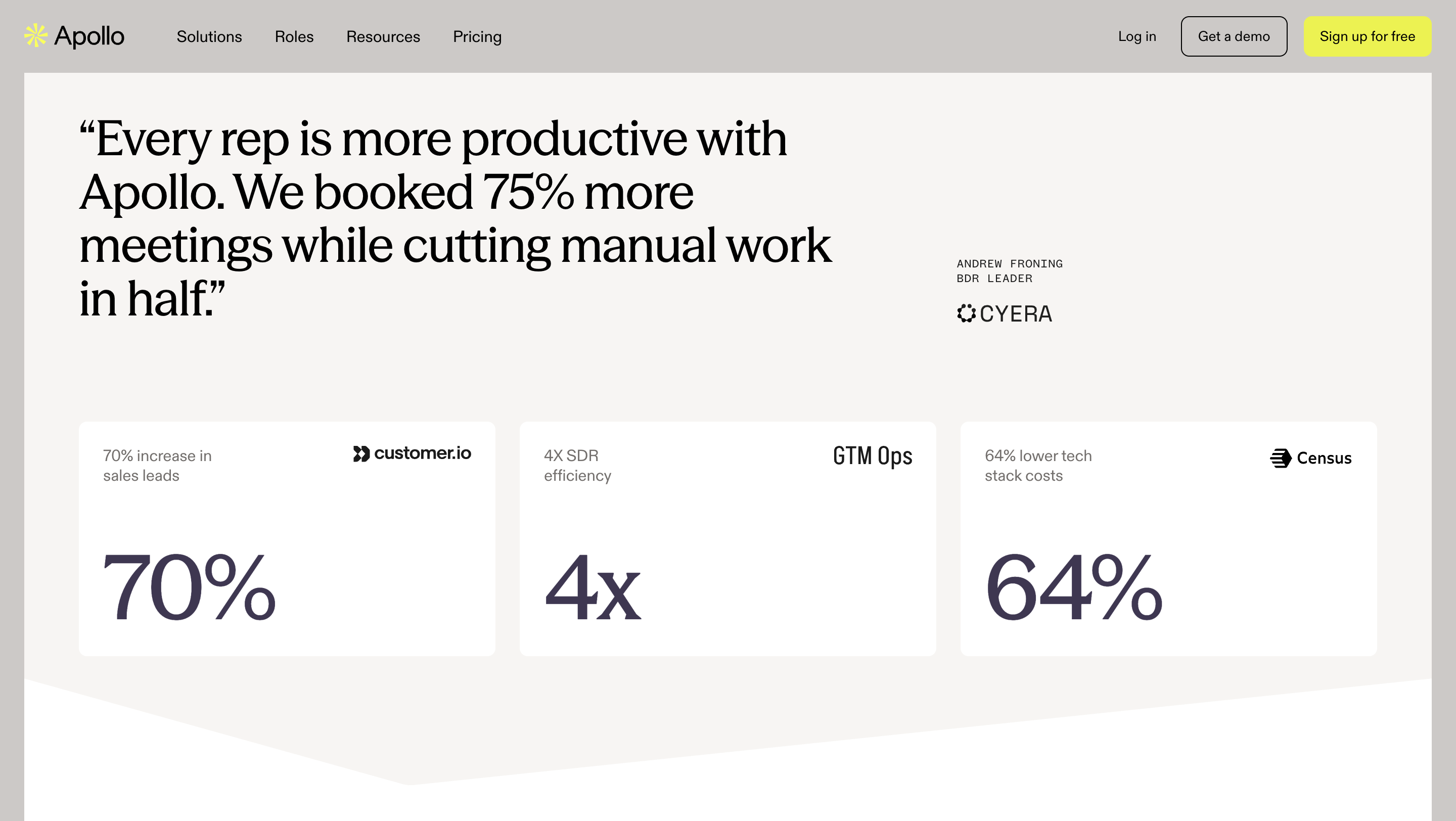
Apollo.io is a full outbound revenue platform that combines a 275M+ contact database, intent filtering, email sequencing, dialer, and LinkedIn automation in one tool. It is the most widely used all-in-one prospecting and outreach platform for B2B sales teams of all sizes, with a generous free plan and accessible per-seat pricing.
Features:
- 275M+ verified contacts — with advanced filters including industry, headcount, tech stack, and funding
- Intent data signals — keyword and topic-based intent filters for identifying in-market accounts
- Email sequences — multi-step automated follow-up with A/B testing and analytics
- Built-in dialer — call directly from Apollo with call recording and transcription
- LinkedIn automation — profile visit, connection request, and InMail steps in sequences
- AI email personalization — generates tailored opening lines and sequence variants based on prospect data
- CRM integrations — bi-directional sync with Salesforce, HubSpot, and Pipedrive
Pricing:
Best For:
- — Teams that want prospecting and outreach in one tool without maintaining a separate data provider
- — SDR teams under 20 seats where per-seat pricing is still affordable
- — Founders and small teams using the free plan to test intent-driven prospecting before committing
- — Organizations that need the most flexible entry point into intent data and outreach automation
Apollo's free plan is the best no-cost entry point in this category. For teams that don't yet have a $25K+ budget for enterprise intent tools, Apollo provides 80% of the value at 10% of the cost. Verdict: Best all-in-one prospecting and outreach platform for teams under 20 seats or on a limited budget.
How to Choose the Right Intent Data Tool?
The right platform depends on where your buyers signal intent, what your team is resourced to act on, and how much you can spend. Here is a decision framework.
1. Start With Your Budget
Intent data pricing spans five orders of magnitude, from free (Apollo, Lusha, Factors.ai basic) to $300,000+/year (6sense, Demandbase enterprise). The biggest mistake teams make is entering a sales cycle with a major vendor before establishing whether a lighter tool would drive the same result. Start with Apollo or Lusha if you are under 20 seats. Graduate to ZoomInfo or Cognism at $10K-50K/year once you have proven the motion. Consider 6sense or Demandbase only when you have a dedicated RevOps team and ABM infrastructure to extract value from predictive scoring.
2. Match the Signal to Where Your Buyers Research
Not all intent signals are equal. Web behavior signals (Bombora, 6sense) tell you a company is researching a category. Review site signals (G2 via Factors.ai) tell you they are evaluating specific vendors. Website signals (Factors.ai, ZoomInfo WebSights) tell you they visited your site. Event and relationship signals (Conexa) tell you they showed up in person and had a conversation with you. The highest-intent signal is always the one closest to a direct expression of interest. For relationship-led businesses, that is the in-person meeting. For digital-first businesses, it is a product page visit or a comparison on G2.
3. Assess Your Operational Readiness
Enterprise platforms like 6sense and Demandbase require 3-6 months to implement and a dedicated admin to operate. If you don't have RevOps capacity to build account lists, create scoring models, and orchestrate plays, you will pay six figures for a dashboard no one looks at. Simpler tools like Apollo, Lusha, and Conexa are operational within a day and require no dedicated operator. Choose the level of complexity your team can actually absorb and execute on.
4. Check for Data Overlap Before Adding a New Tool
A common and expensive mistake: buying Bombora standalone when you are already on ZoomInfo, Cognism, or 6sense, all of which bundle Bombora-powered intent into their platforms. Before adding any intent data tool, audit what signals you are already receiving inside your existing stack. If your CRM or sales engagement tool already surfaces intent signals, you may be paying for the same data twice. The priority is always signal quality and actionability, not volume of data sources.
5. Prioritize Tools That Connect Signal to Action
Intent data alone does not book meetings. The platforms that deliver the best ROI are those that connect a buying signal directly to an action: an automated follow-up email, an alert to a specific rep, a triggered ad campaign, or a Conexa-style follow-up sequence sent within minutes of a live conversation. When evaluating any platform, the question is not just 'what signals does it provide?' but 'what does my team do with those signals within the first 24 hours of seeing them?'
Conclusion
The intent data and buyer engagement space has never been more capable, or more crowded. Enterprise teams with ABM infrastructure and RevOps capacity should evaluate 6sense or Demandbase for predictive, multi-source intent at scale. Mid-market teams wanting a cost-effective alternative should look at Factors.ai or ZoomInfo. EMEA-focused phone-heavy teams belong on Cognism. Individual reps and small teams get the best value from Apollo or Lusha. And for businesses where relationships and events are the primary pipeline source, Conexa captures the highest-intent signal of all: the moment someone walks into a room and shakes your hand.
Frequently Asked Questions
Are review sites like G2 effective for high-intent engagement?
Yes, and they represent some of the strongest intent signals available. A company researching your category on G2 is further down the buying journey than one consuming a third-party blog post. G2 Buyer Intent data (available through Factors.ai and directly through G2 vendor profiles) tells you which companies are comparing you to competitors in real time. For software companies, this is often the highest-value intent signal outside of a direct website visit or demo request.
How do intent platforms improve engagement ROI?
By concentrating outreach on accounts that are actively researching, intent platforms reduce the percentage of outbound effort wasted on accounts that are not in a buying cycle. 6sense data shows that 94% of B2B buyers have already ranked their preferred vendors before speaking to sales. Intent tools give you visibility into that research phase, so you can engage accounts before they have made up their mind rather than after they have already chosen a competitor.
Should I choose one platform or combine several?
Most mature revenue teams combine a first-party signal source (website visitor identification), a third-party signal source (Bombora-powered intent), and a contact data layer (ZoomInfo, Cognism, or Apollo) to build a complete picture. However, many of those signals are already bundled inside platforms like 6sense, Demandbase, or ZoomInfo, making standalone Bombora purchases redundant. Start with one platform and audit what signals are already available in your stack before adding a second data source.
What should I consider when picking a platform?
Five factors in priority order: (1) Your budget and the minimum viable signal needed to take action; (2) Where your buyers research (third-party web, review sites, or your own site); (3) Your operational capacity to act on signals within 24 hours; (4) Whether you already have overlapping intent data in your existing stack; (5) Geographic focus, which matters significantly for compliance, particularly if you sell into Europe where Cognism leads and Bombora's coverage drops.
Which platform is best for B2B intent data and sales activation?
It depends on your team size and use case. For enterprise ABM with predictive modeling: 6sense. For ABM with advertising-first strategy: Demandbase. For all-in-one prospecting and outreach at scale: ZoomInfo or Apollo. For EMEA phone outreach: Cognism. For mid-market ABM analytics: Factors.ai. For AI-automated outbound: Artisan. For in-person relationship-driven pipeline: Conexa. For individual reps on a budget: Lusha. There is no universal answer, but for most growing B2B sales teams under 50 seats, Apollo's free or Basic plan combined with Conexa for event follow-up covers 80% of high-intent use cases at a fraction of enterprise platform cost.